vendredi 18 novembre 2016

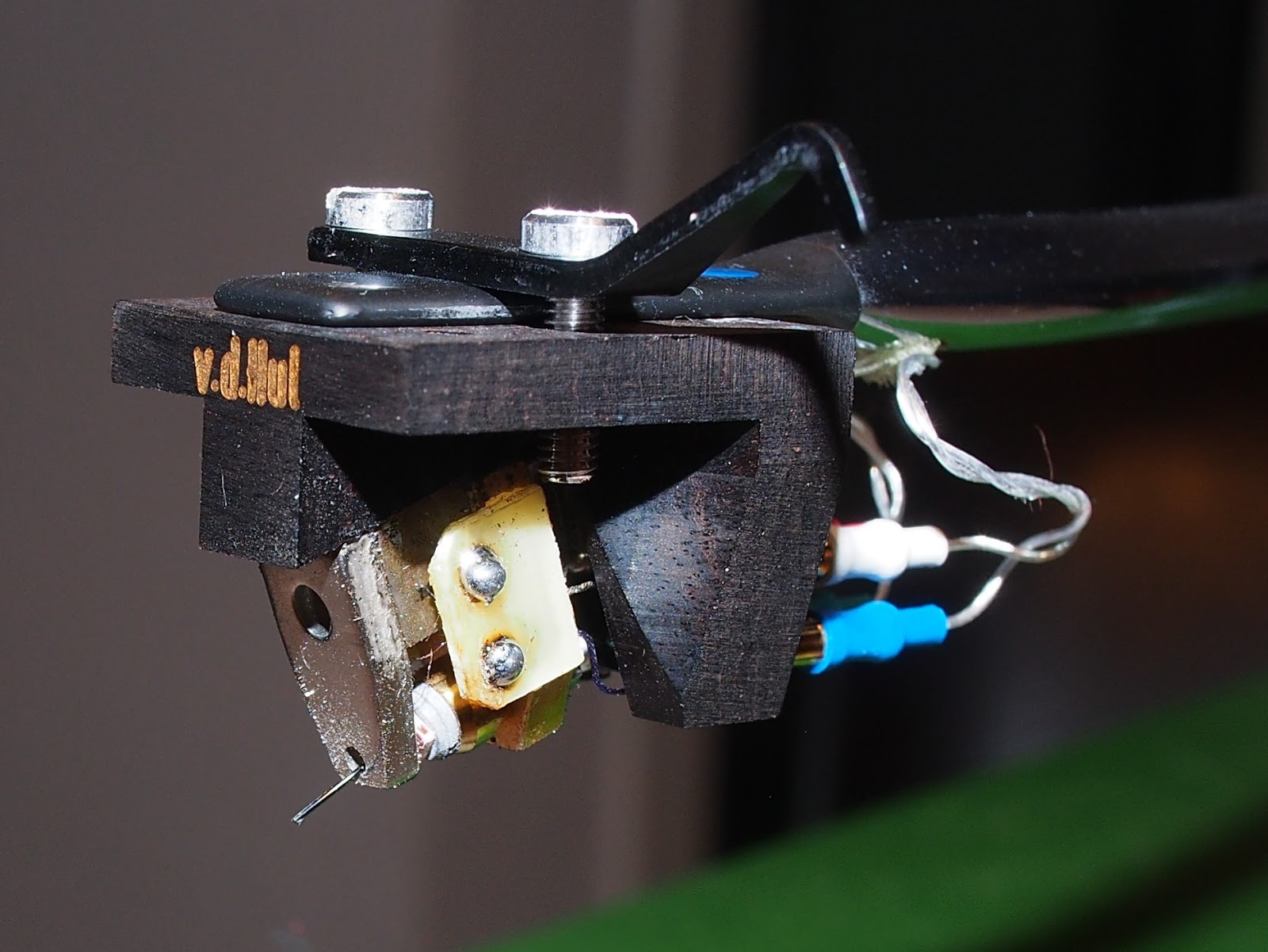
Van den Hul The Crimson Special Edition (Ebony)


I really liked the Crimson as you can read in an older article of mine.
So I was somehow curious about this version. In which parameter this SE would be a better Crimson ? At the same time I thought it would have been a difficult task since the Crimson is an extremely well balanced cartridge and most of the time with very well balanced product when you try to make them better you improve few characteristics but you loose some others. In a way this is what happens with the SE version, but it is not the all story. I would say that the Crimson SE does not sound as a Crimson. The difference between a Crimson and a Crimson SE is at least as marked as the difference between a Dynavector XV1S and a Koetsu Rosewood. VDH could have very easily called this cartridge with a different name. The only thing is that estetically they would be too close for a customer to accept a different name. The only thing I can notice is the wood body in the SE version made from ebony.
The difference between the SE and the standard Crimson reminded me of the difference between two cartridge that I love but that are not in production any more : the Myabi Standard and the Myabi 47.
But in this case the VDH Crimson SE would be the Myabe Standard and the VDH Crimson the Myabi 47.
The SE is so different from the normal Crimson that it is not that if you like one you would like the other one too. Actually it is not too difficult to like both since both are exceptional cartridges but they excerse their virtues in different territories.

In a not comparative test The Crimson would be appreciated for its timbric shades expecially in the medium range, and the rare capability to sound fast but delicate at the same time. It sounds more like an electrostatic speaker.
The VDH SE would be loved for its dynamic swing, it has a very high dynamic contrast and it is tight and the instruments are really carved out. Its shades are more presents in the differentiation of the attack of the notes. If Naim would have ever made a cartridge this would be it.

In direct comparison their differences are even more pronounced. First of all we are aware of a different tonal equilibre. The medium of the SE is more recessed and darker and timbrically simplified but not the medium high. The image landscape is different too: the SE is more upfront but the layering in the depth field is more evident. This layering is highlighted from a much more pronounced dynamic contrast of the different instruments. The decay of the notes are shorter with the SE but have more energy and this partecipate to make the instruments more carved out and the space between the instruments more silent. Since the attack of each instruments is more evident with the SE there is also a feeling of more urgence and more energy in the medium- high, high frequencies range that are beautifully rendered. This region is portraied with exceptional realism since you don't have here preserved just the energy but also the timbrical richness and density and this is extremely rare if not unique. In comparison the Crimson is less compact and solid in this same frequencies, more light. The overall sound of the SE is tight and going toward the dry side. I use this adjective not as a bad thing since a wood instrument sounds better when is dry. Strings sound better too, percussions sound better too, piano sound better too, cymbals too, the human voice sounds... it sounds better on the normal Crimson. In the normal Crimson the human voice has a more complex painting. Timbres working of the voice and its inflection are much more evident. In the SE the human voice is in comparison more simplified.

Where the Crimson is delicate, the SE is firm and tight; where the Crimson let it go, the SE get in control of things; where the Crismson paint with 20 colours the SE uses 15; where the Crimson let you see the shading graduations between two different graduations of dynamics and timbres, the SE make you much see much better there are two different graduations in their external structure. The SE differenciates the structure, the Crimson differenciate the content.

The SE is the perfect cartridge for who cares about the fondamentals of the music, for its roots, for the one that likes to be exiceted by the music. The normal Crimson is more for who listen into the music, for the one who likes to fall inside the message of the music.
If I would be pressed to compare this two cartridges to some classic hifi speaker I would say that the normal Crimson is more an electrostatic Quad while the SE is a classic Tannoy.

It is strange what this SE made me think about: my first serious amplifier: a Naim Nait 1 ( yes I am 50 years old). It has that kind of simple and at the same time effective way of comunicating the musical message. Of course it is not an entry level product so it has much more resolving power then the Nait and the astonishing density of the high frequency is something that the old Naim could only dream of as it could be only dreamed of by most of the recent or past hi-end products. But this kind of simple truth is there.
It is fast, it is reactive and agile, it is tight, it is powerful. It communicate the beauty of the energy in music. The simple truth of music.
It is a BMW Mserie, it is an Alfa Romeo Giulia Quadrifoglio, or if you are not a car lover is
for the burbon and cigarettes lovers with powerful and noisy motorcycles.
Life is beautiful if we don't make it complicated.
It is the grab and kiss not the never ending seduction game.
Not for the contemplative people.
The Crimson SE is there with the best at any price.

mardi 1 novembre 2016

Wireworld Gold Eclipse 7 interconnect


into the listening stage...

mercredi 28 septembre 2016

Audia Flight Classic combo (pre +FL100)


I am going to write about these two products that have been in production in different version for many years. They are mine. I didn't buy them but I did an exchange with a friend of mine that was in love with my Shindo Labs that I was not using too much since its power didn't allowed me to play around with difficult loudspeakers, and then because i like to change like many of us. I found strange that in all these years I have never been pushed to own these two since they are absolutely beautiful made, on pair with gears costing three four times their price and they are nice looking too to my taste since they have a nice understaded elegance. I think I have never had been pushed to own them because as many of us my brain has been deviated by what we have red when we were at the begining of our hifi sickness. We all started dreaming of Mark Levinson, Conrad Johnson, Audio Research and so on. We all, in a small part of our heart like to own legends. With time and with the opportunity maybe we bought legends and we sold legends so many times that we don't care about legends any more and sadly enough we realise that legend or not legend we keep buying and selling hifi stuff. So we start having another look and relation with legendary makers. But they indeed keep on exercing a certain magnetism in our heart.
Audia Flight is not legend but it is built like a legend and expecially it sound like a legend.
This is why I am going to write about this combo expecially because is also very cheap in comparison to legend. First let's go to the final conclusion. The FL100 is better then a Pass Labs class A that I have, better then a Accuphase Class A of a very close friend of mine better then one of my Lamm. I avoid saying models since all of them cost much more then the FL100. The conclusio is: it is rare to find an amplifier on its level and to find something better you have to invest a fortune.
The preamplifier is also extremely good but it is so undemostrative that is very difficult to have an idea of it. Just when you compare it to legend you realise that it does things less well but that most of the time is more balanced and makes you feel much less the need of adding something or changing something.
But the most annoying thing for this combo is that to really appreaciate them is an impossible cable matching war for most of us. In the years I have collectioned a really enourmous ammount of cable that goes from the mid level to the if I tell you the price the first to be ashamed is myself. With all the cable you give them their sound change like with any component but you don't have neither the mesure nor the suggestion or prelude of their exceptional status. You just think they are very good. I gave them an all Cardas menu, a MIT one a Tara Labs an VDH a Synergistic Research a Kimber, but was at the last menu that they showed a very special a rare combination of power, stability, solidity and delicate finesse at the same time with an extremely correct sense of timing. When I talk about cable menu is because I gave them the same maker of cable even for the power chords and this is essential even if you don't want to believe it or to accept it. The last cable menu was difficult for me and was impossible without some friends of mine since I didn't have all the cable of these maker: Wireworld. So when I had all silver cabling from Wireworld they become legend.This is a mistery to me and I would like to know how the maker built them and if he knows it or maybe he never heard his amplifiers sounding at this level.

Now I try to identify the single caracter of the two units.
I will start from the pre that is the most difficult to define.
The Audia Flight pre is a work of art. For the price is built extremely well. It has an elegant understated look that is classical in the best way.
The sound is...actually you can make it sound the way you want. It is like salt. You can put almost everywhere. The only thing you have to be careful is the quantity.
Depending on the cables used it can sound firm, rich, fast, ritmic, open, layered or upfront or spacially organized and so on. It is extremely rare to ear such changes in a preamp and this brought me to the conclusion that this preampli must be the closest possible to be a neutral affair. And this is an extremely good thing. I say that nobody can affirm not to like this preamp. Just because if it say so it means he just listened to with what he had on hands and jumped to this conclusion.
With the standard power cord it is an accetable performance, a little compressed but pleasent nevertheless. But the pre is not compressed at all. You are earing the power cable!
Then you try a VDH Mainsserver and it opens up; the timbres gain colours and so on. Then you try with a Wireworld Silver Electra and the sound becomes darker, much more silence between the instruments and more details and more depth but a little less natural flow. And so on. With interconnecting cable is the same situation. The Pre will make you realize that they are not many very good cable around regardless of their price. And this is a profound truth.

A good compromise for cost perfrmance is the Wireworld Electra 7 as power cord and the Wireworld eclipse 7 interconnect. To be used togheter. With this preampli is very clear you must use a coherence in the choice of cabling. When you match well the power cord with the interconnect one it will sound more accomplished and balanced.
The sound you must get from this preamp is fast but not hurried, stable and firm but with a very difficult to describe delicate touch that makes it in some way inviting. Very, very few preamp have this very difficult to describe quality. Being neutral and inviting at the same time.
Negative point: the set editing meny. This allow you to write the name of the source you are using in the display. Like if you are using a LP12 in the 4 input you can write Linn LP12 in the display. You are going to do it, but you will get frustrated doing it!

I can affirm this preamp to be on a same level of a Mark Levinson 326 that I had for a couple of years and that is much more expensive. It propose you the impossible to define inviting touch, that the ML does not have loosing a little on the bass department that is slightly less powerful.

The FL100 amplifier:

to be continued...

dimanche 25 septembre 2016

Grandinote Celio (latest version).


This is the latest version of the musically beautiful phono stage from Grandinote. Yes I was very, very interested in listening to it since its former version was the only phono stage I have heard that I could have lived with after my Lamm even though it had some weak point, not musically though but in its application. So I really was extremely interested to discover if it was improved in its conception and esecution.
First thing I will start from a building point: inside things are much better then the previous one and the lay out is well organized and tidy enough. Not the NASA style construction or the clearly hand made with visible cables nicely organized that I like but nice and behond reproch. Nothing to be in love with or to be repelled from. The outside changed a little. The faceplate has a slightly different design. I found the faceplate of the previous design a little more elegant, this one a little more understated as the global size of the unit that is less deep and definetly easier to fit in a shelf.
In the back of the unit things are almost the same except the loading selectors that take place of the rca connector to which you had to connect resistive plugs to get the desired setting for your cartridge.


So I connected the new unit to my system. After half an hour of playing I sat to have a listen. Even though the unit was brand new I could easily ear some improvements and differences. The improvements in comparison from the previous version were strange enough to be put in words in an anylytical way but they were clear nevertheless. If I have to put it simple I would say the sound is somehow more solid and there is less of a kind of oxigenation and light behond the interpreter that was typical of the previous unit but that could give a feeling of a certain fragility. 

This light within the sound is still there but in a lesser degree. I found this thing to be a good choice since the Celio sound this way was more consistent and predictable.

The beautiful layer of shading in the high frequencies is still there, the natural timing is there as was in the previous version. Its tonal colour is very slightly darker. And the separation of instruments is slightly better.

Let's go to the weak point of the first version. loading. In the previous version I have noted that loading the Celio was slowing its sound and expecially making it loosing its magic characteristics. Loading the Celio was transforming it in almost another phonostage and loosing its magic. This latest version is more constant. You can load with the selectors switchs at its back and it will keep it personality much more then the previous version. Still I prefer it at 47kOhm but with certain cartridges if I need I can load it at 1000 and even at 500 or 300 and being happy. Still with less then 300 load the Celio changes character and becomes an excellent phono preamp but looses its particular magic. This is also a strong improvement over the previous version since with the previous version I was feeling almost mandatory the use of open loading at 47Khom.


The Grandinote Celio is the only pre phono that I have tried that could replace without any regreat my Lamm LP2. I put them on the very same level. I cannot really say which one is better.

It has a very low noise floor, it has all the hifi characteristics you are after with a special liquidity and light.
I would like to say more of this light from within the instruments: it is not a real thing. It means it is not that real instruments generally have it, only few instruments have it. It is something that has to do with the reproduction of the medium high frequencies. VDH products, at least the top range tends to go after this effect, with more or less success. Few good 300B amplifiers have it too. It is something extremly difficult to achieve and I feel it is something that when you ear properly esecuted is fast addicting. I love this effect. We loose so much during the recording that it is easy to feel you need something more. What I mean is: I did few years of recordings, not in a professional way, but for myself and for friends musicians. Even in the monitoring after you have recorded for example a Bosendorfer you don't get it right. I have to say that you don't get it right even earing it in the recording room since the recording room generally is not a nice room for the instument to perform. So when it is perfect recorded you have the sound of an instrument playing in a dead room, the sound is not what you are used to ear. I don't like it. So for this reason some magic tricks that only hifi masters can achieve with experience or with luck let you enjoy the music much more then if you were earing it in a studio. At least for me since there are some people that say that is in the studio with the master recording where you ear the best reproduction. Sometimes these hifi masters are capable of putting some lost life in the reproduction of the instruments. Of course I think this added life is a kind of distortion. The big problem is that we have a lot of distorsions that will add in the hifi chain so the outcome is impossible to forecast for this reason it is a question of matching the right gears togheter.
The new Celio version still has this light, as I previously said, but it is less evident. It is not of a golden colour, it is not the light of a sunset but of a dawn.
Since this caracterisitc is less pronunced in this latest version it makes the Celio more costant in its performance. You tend to have its characteristics with a far larger load choice.
With the previous version charging the Celio (thing that makes the sound darker in any setting and with any phono preamp) was making you immediately loose that kind of glowing ligth that you had a t 47Khom so the Celio was immediately changing the way it was presenting the music at you. In the new version since this "glowing" is less evident at open load and balanced with the other characteristics of the music reproduction, when you charge it down you don't have that kind of loosing a good thing you had with the previous unit.

The Celio is a wonderful product. It is more then an excellent hifi product: it is an excellent music instrument. It is capable of giving life to the reproduction of music.
Very few hifi products of any price are capable or were capable of doing it.

PS: peculiar thing in the Celio use: after you power it give it at least five minutes before listening to some music if not strange sound will come out of it and one channel will fade away and you will think something is wrong. For its design its transitors need to polarise and get stable. The fist version was muted in the first 5-10 minutes, so no sound was coming out of it, but in this last version sound comes out even after 2 minutes but it will sound wrong and like something broke down. So don't listen to it after turning it on for at least 5 minutes. You can leave the unit on all the time. It uses very, very low electricity.

lundi 25 juillet 2016

Pre Phono: Van den Hul Grail; Audia Flight Phono; Grandinote Celio.


If it was a turntable it would be a direct drive, a Garrard.
If it was a tonearm it would be a Linn Ekos
If it was a cartridge it would be a ...yes a VDH.
If it was a geographical place it would be the Savanes in South Africa
If it was a wine it would be a Barolo Pio Cesare
If it was a pianist it would be Sviatoslav Richter
If it was a jazz guitar player it would be Wes Montgomery


If it was a tonearm it would be a Triplanar
If it was a turntable it would be an high mass, a Mitchell Orbe.
If it was a cartridge it would be a Dynavector
If it was a geographical region it would be Brittany in France.
If it was a wine it would be a Chateau Latour
If it was a pianist it would be Evgeni Koroliov
If it was a jazz guitar player it would be Joe Pass


If it was a turntable it would be a Sota.
If it was a tonearm it would be a tangent one or a Naim Aro; I couldn't decide between the two
If it was a cartridge it would be a Koetsu
If it was a region it would be the region of Tuscane in Italy.
If it was a wine it would be a Chassagne-Montrachet
If it was a pianist it would be Anton Rubinstein
If it was a jazz guitar player it would be Grant Green


Audia Flight Phono


This unit MUST BE BROKEN IN. Audia says it runs for 50 hours and this is the least for it to sound ok, but if your unit for a reason or another has not been ran in you will be aware of it very easily: it will sound bad. As simple as that. It is not a question of getting used to its sound. If it does not have enough hours of playing you cannot get used to the sound it makes since it sounds very poorly. The high frequencies will be aggressive and the sound will be closed in and also a little slow. After about 30 hours of music playing, not just leaving the unit on, it will start improving. At about 40 hours the unit starts to sound quite good and it will become excellent only later.
Of course I will write about its performance after the run in process has been done. So now you know that if you buy this unit and it doesn't sound good it means it needs to be played for many hours. I say this because we are at a level with these phono stages that if you buy any one of these without even earing it or comparing it  you will be totally happy.  And even comparing them will put you to the point of not defining a better or worse but of different qualities. Only at direct comparison you could prefer slightly one over the other, each one is so complete and so well balanced in its performance that you cannot not like it.
For this reason in the prelude I wrotw many of if it would be a pianist or a jazz guitar player it would be and so on. If you realized they are compared to absolutely excellent musicians , wines and so on.
Now back to the Audia and its main characteristic: warm austerity.
It is strange to combine these two adjectives. Generally when we think about austerity we think about being cold too. Not here. I don't have many things to compare this strange feeling to if not to a composer: Bach. If the Audia  was a musician it would be Bach. I think the music of Bach describes the Audia well. It has power and composure, it is austere but light and warm at the same time. It is articulate and deep and even when it goes fast it doesn't show it. It let the music go but always in a controlled way, it is easy but complete at the same time. Now about its warmth. How can be a unit absolutely neutral, austere and at the same time warm to make me think of Bach? The midrange warmth is not due to any kind of colorations. It is dead neutral. So from what this coloration comes from? It took me a while to figure this out. It is given by a lesser dynamic contrast or less evident then in the other range transient attack in the bass medium range. Doing this way the bass the medium is not coloured or pushed up a la Linn LP12 or a la LS3/5a giving an euphonic warmth, but it looses that very small percentage of transparency  that would bring this unit to sound clinical. I found out this to give also an elegant signature to its sound.
And then now we have to talk about the silence between the notes.  The Audia is the master of silence. This silence space is dark but not thick. I hate when is thick. Its redention of the silence is the best of the other two phono here. Another thing that the Audia does better then the other two phono here is the layering in the depth. This depth is at a level of absolute reference.
The Audia is the phono stage here that gave me more the feeling of giving what it gets and adding  less of its own to the music reproduction.
At its proposed price is an unbelievable achievement and very hardly understated since we don't have any recent review of this phono stage. It is on a pair with one of my two reference units and very close to the other one I use as reference, loosing in their comparison some timbric richness (but this reference unit has tubes) but winning with a deeper silence and more flexibility. One these two unit is more then double of the Audia price and the other one is more then the triple of its price...


VDH Grail.

At this price range you need to have something to say in a more special way that is common. We are getting in a territory in which the performer does not only have to know how to do it but it must have its own way of doing right. Like excellent musicians. They are not just technically complete but also each one of them has its own way of giving you the same musical message.
For the VDH Grail this special characteristic is instruments differentiation, but not like we normally intend it, for this reason this is its special talent.This differentiation is due to the rendition of their very own dynamic window (rare) and accurate space more then their timbre differentiation that is good but not excellent or the tonal colours that are very good but not in the rarely heard land. I will add more about this individual dynamic window since this is a rare characteristic. You ear the dynamic of each instruments not in an open window that contains the all dynamic expression of all the musical message that is more common, but each instrument has its on window, bigger or smaller. This I found very fascinating and entertaining. In combination with a great dynamic contrast. The Grail has the best dynamic contrast of the other two phono here. It has power and finesse. 
It proposes you a music you can see.
You don't only ear the instruments but you have an almost material reconstruction, like an acoustic hologram. If you like this you cannot find a better phono then this one.
Life is what you can see or music is what it can make you see.


Grandinote Celio


Here the key word is: you must know what you want and what you are doing.
I develop this concept. 
It does not has the layering in the depth of the Audia or its silence between the instruments or the dynamic contrast of the VDH Grail but with no doubt has the best timbre and timbrique shades. Expecially in the high frequencies is capable of giving textures and shadings and this is extremely rare. Then it manages to give the best medium bass that I have ever heard on a phono stage. This region is extremely detailed without being analitical or hard . It is just at the border of doing too much but it doesn't do it. It stops just a little before. 
Its bass goes deep but it is not tight but manage the rare ability to be agile even though it shoudn't be since a little soft. It is like a fat cat. It is agile in its movements even though is a little soft.
This is what you get with no loading so at 47kohm or at about 1000ohm.
If your system and your cartridge likes it or your intention is to build an analogue source around the Celio you will get to a magic level, you will get a fluidity that it even rare in the best tubed unit with a silence that for the tubed unit is absolutely imposible to obtain.
But if your cartridge or one of your cartridges don't like the 47 kohm load (or 1000 ohm) and you need to load the Celio down things will change. You will loose its magic. It will become just very good. If you like fluidity, tibres, and an absolutely impressive transparent and spelling medium range, just get the Celio and buy a cartridge that likes the open loading. I had an extremely good combination with a VDH Black Beauty medium output (1mv). 
The Celio is like a F1. You cannot blame the car if you didn't use the right tires or the right aereodinamic charge or setting. The Celio does not forgives. Or to say it better it forgives your mistakes but you pay for them loosing its magic. And out there there are very, very very few magic units. If you want magic get a Celio and work with it. You should just consider the Celio as the starting point of your analogue chain. It is the status  it likes to have and that deserve to have considering the final results you can get out from it.


lundi 4 juillet 2016

Wireworld Platinum Electra Power Cord

This is the top of the power cord line offered from Wireworld.
There are still many out there, but they are becoming less and less, that think a power cord cannot make that much difference. The ones that keep on thinking this belong to the same categorie of people that at the beginning of the genesis of the hifi cable war were saying the same thing about interconnect and loudspeaker cables.


It is true that you can put up togheter an extremely good system with fairly cheap wires but generally these systems are already expensive and if you put on them better cables they will sound better anyway.
It is also true that each system and each ears have preference over a certain cable and it is not true that the more expensive one is always the best matching or to our liking.
This is a prelude to say I am not the kind of being seduced by a price tag (even though I am very sensible to build quality) , but I am not the kind of keeping an hard line that a cable cannot make a difference. I plug a cable and give time to settle and if it is good to my ears is good. For me it is like going out to dinner: I don't care if they explain me how fantastic and elaborate a plate is, I taste it and if I like I like if I don't l don't. But we have to admit that if we want to be for help to others we are not going to write about wines if we don't drink wine or about how good a fish is done if we cannot stand fish at all. We must have a certain exposition and a developped sensibility to these kind of taste and nuances. 
If you are considering spending this kind of money on a power cord it means you already been exposed to the ruin of being after not only to what you like but to the mistery of how good it can be.
Let's say it immediately: this cable is an extremely good power cord. Its place is with the very best.
The Platinum Electra is surely better then most cord cables costing 20-30% less (I say most since I didn't heard them all, it is impossible) and it is better of most costing the same price.
If Ihave to sum its sound up in few words I would say: tidy composure within a great dynamic expression. It is true that many times these two qualities or adjectives are mutually exclusive, for this reason I think the Platinum is a special cable. 
Its dynamic window is very open and relaxed nothing is projected or compressed. Yes you have a sensation of frequencies freedom in all the music spectrum. All this with a dead black silence. Noise floor very, very low. I would say there is no noise at all. Surely one of the lowest for a power cord.

Then you listen a little longer and you will notice every time the same thing: it is so linear in the medium high-high frequency, linear and clean. But the best caracteristic of this is the density of these frequencies. It is not clear and ethereal or splashy, it is clear with a density. And this is rare. Generally when hifi gears goes open up high things up there get untidy. Not with the Platinum. It is clear and tidy.
Focus is extremely good and also very good are its ritmic capabilities that keeps involvement high. This involvement is lacking in many hi end power cords. You enjoy them with your brain but not with your heart. The kind of an extremely accomplished guitar player that can play everything at the speed he wants, playing each note and chords without the minor esitation but that at the end you cannot care less since he is not able to convey the soul of what he is playing.
Its timbres are very well rendered but not so colorful as in other cost no object cables and its tidiness walks on a tigthrope to be felt, I said felt, but it is more a suggestion of being slightly mechanical then the actual feeling it is slightly mechanical. This last "weak point" I think actually to be a great achievement since it let the hifi lover that can sometimes be also a music lover like I am to appreciate both things: the hifi and the music. Sometimes in some system you hear the music well pulling all the right emotions out of you, but when you are in the hifi mood and you start listening mostly with your brain you realize you need more layers more focus and so on.
But is in the using with many gears that you are going to really get the best quality of this power cord. And this quality you soon realize is a necessity. Then you put it in a preamplifier, then to an amplifier then to another amplifier and so on. Your preamp was sounding open and dynamic, it will make it sound more open and dynamic, or it has a beautiful rithmic expression it is going to make this expression even more evident, the amp you plug in is neutral, is going to be even more neutral, it is warm sounding it will make it sound warm. This cable will let the component is connected to give it all it has. If you thought your preamp was good you never thought it was so good when you connect it to this cable. And even something else: I have a preamplifier that I always considered OK but when I gave it this cable I was stunned to find out how good it was. It is like it really needed this cord to fly. Especially components conceived to be as neutral as possible  will profundly benefit from this cable because they show too often the caracter of the power cord they are connected with. So when they are kind of slow or do not focus that well or show a constrained dynamic expression you won't believe what all these caracteristics comes from the power cords they are connected with. Of course I am talking about good, well above average component, not average components. To say the truth I don't know how an average not so good component will react to this power cord, I didn't try it with, but I doubt who spends this kind of moiney on a power cord is in possession of a mediocre one.

The problem with this kind of cables is that they are so obviously superior to so many cables out there that is a real, real problem trying them out without having the money to buy them.

Another problem that I have tried to solve was this: if I have enough money to buy only one of this Platinum, where should I put it? 

The more I listen to power cords the more I realize that we have to seriously revise our way of spending on our hifi. I think power cords are the cables to start with our search on making our system sound better.


mardi 21 juin 2016

Tiger Paw Akula update

It has been a while since my wrtiting about the Tiger Paw Akula LP12 subchassis.
In the meantime I have kept on listening and trying and found out new insight.

I have spent more time trying to highlight the difference between the two way the Akula can be mounted: the 1- classical way, with the armboard connected to the floating subchassis like all other Linn subchassis and the 2- fixed armoboard way, where the armboard is fixed to the plinth and the rest of the subchasis floats.

Again many cartridges used. Many it means 12. And four completely different preamp-amp-loudspeakers conbinations. Yes a lot of work!

This is what I would like to add to my previous findings: the two armboard mounting options do sound different from each other and in some combination their differences is very evident in other combination is just evident. So which differences are we talking about? First of all is reassuring to say the timing and rithmic capabilities is a sonic parameter that is left untouched from the different mounting methods and this is reassuring. This for me is very important since it means the musical message is not going to collapse any way you mount it. Timbres and focalisation of the instruments are differents and with them a different kind of resolution and transparency.
Let's develop this:
classical way (armboard connected to the subchassis): timbres are more compact more dense. This makes the depth of the immage more evident since the different timbres contrast is more evident.

If mounted with the armboard fixed to the plinth the density of the timbre is less compact it has less colour but has more shadings, more microdetails, more ambience clues. The landscape is larger and higher and it has a wider dynamic window. It is more like a tube sound compared to the armboard connected to the subchassis that can be closer to a solid state sound.

Another thing to notice is that with the armboard fixed to the plinth the turntable is more reactive to changment to different thing such tonearm cable, the shelf or table where is located and more sensible to external vibrations.

As said in my first findings I have the feeling that much of this is due to the different setting of the suspension since whith the armboard connected to the plinth the spring are less loaded.

At the end I can say that with the classical mounting you have a sound that is much closer to the original LP12 sound. With the armboard mounted to the plinth the sound gets closer to a Michel Gyrodeck without loosing the LP12 follow the tune capability. Read well: itgets closer means the sound gets to that direction not that is more similare to a Gyrodeck then to a Linn LP12.

If you love your LP12 and just want to improve it go with the classical mount; if you like your LP12 but you are not able to love it since it feels a little too different from other turntables you like you can use the amboard fixed to the plinth method.

Last thing. This is completely woo do and for me not technically comprehsible: the Naim Aro user knows that one day it sounds magic and another one it can sound strange. Strange means not so good, not so good as you know it can sound with the same music playing.

With the armboard fixed to the plinth this inconsistency is just gone. It sounds always the same.
With the classical mounting (armboard fixed to the subchassis) the Akula gives the Aro a better consinstency then other subchassis, say the Majik or the Sole (not tried the VII latest version)  or the Rubikon (out of production) , but it still can happen, even though much more rarely, that one not good day. Go and figure this out why...

Which one I prefer? you know I am an hifi Casanova so I need to leave the doors open for different acoustic affairs, so I cannot really say I prefer one to the other if I have both option open, but if personally I had to choose only one I would go for the fixed armboard. I would have if one option was loosing the rytmic capability I love, but it is more question of tonality then other things. One thing for sure: the classic mounting option is more open to accept cheap cartridges and let them sing well and questioning the more expensive ones. With the fixed armboard mounting the cheap cartridges sound more the way they are or they should sound or whatever. If they are good  they expose a good cheap sound, you are more aware of the missing nuances or colouration or other shortcomings that are well taken care by the more expensive cartridges. The classical mounting option in a way it molds the cartridge you are using to its own musicality. The way LP12 did and does. It is like the turntable and the cartridge become one instrument. With the fixed armboard option it is like a chorus, they partecipate at the same performance but you can hear them in their own. It is more difficult to get the best out since you get more out.

One word for the comparing method. I am completely and absolutely unfavorable to the A/B comparing method. It is the best selling method but surely (for me) not the best method to get truth out of a listening.In an A/B method you will tend to be pushed on your judgment by some caracteristic of the system A or B. It is not a absolute judgment but a biased one. The bias is set by one of the two systam or by both and with this bias set we get to conclusions that are biased. So what happens? We buy something more expensive and "better" performing in many parameters that were exposed by the A/B comparison then we start living with it and after few weeks or months we start to feel something is not right. What was better transform itself in not right. Yes I know it is difficult, but it is the way it is. This method, the A vs B, is not the right method but it the most comfortable for our conscious of well spending our money.
It makes me think about an article I have red not too long time ago about Stradivari violins. They gave these violins to play in a blind test against some new produced violins.Most of the players chose the new products. But beyond this test everybody using Stradivari said that a stradivari is like having more colours to paint...

Let's get deeper into this: you have three systems that are the same, same tonearm, same pre phono, same pre phono loading, Naim Aro tonearm, same cartridge, same set up.
In one you have the Akula sub chassis with the armboard fixed to the plinth (I call for brevity Akula 1) , another one with the Akula but with the armboard fixed to the subchassis (I call for brevity Akula 2) , and another LP12 with another maker subchassis. What happens? The Akula 1 sound more open more dynamic but less material, the Akula 2 sound more solid, the system three sound the way it sound better or worse then the other two options.

But what happens if we change cartridge loading? Why I get into this? Because with the Akula 2 and other subchassis I tend to charge less the cartridge in comparison two other references turntables I have got.
Before I was setting to 1000 ohm but if I set to 100 ohm the Akula 1 is better then the other two.
This loading matter happened since with different LP12 subchassis I had the tendency to load less the cartridge in comparison to what I know these cartridges sounded best in other systems.

What this suggest me is that the Akula 1 is the most transparent to the cartridge, so we have to control it with the correct loading; Akula 2 corrects the loading overdumping the subchassis with the mass of the armboard fixed to the subchassis (Linn classical way).

So at the end you realize that set up at the best to what each system needs the Akula 1 will bring you further; set up without optimisation or like another similar subchasiss the Akula 2 have more possibility to sound better then an Akula 1. But Akula 1 definetely can bring you further. The Akula 1 let you much more hearing the limit of the cartridge you are using.

For example you have two VDH cartridges. the DDTII at the entry level and the Crimson.
With the Akula 2 and loaded the same the Crimson is better then the DDTII but I don't think in the comparison you can justify 4 times the price.
With the Akula 1 the DDTII limits are more apparents, even thought it is an excellent cartridge, but when you mount the Crimson you can perfectly ear why it costs 4 times the price of its little sister.


Now this is all I can say about the Akula.