vendredi 19 février 2016

Vovox Textura


I really didn't have the right attitude for this cable. I have always not liked this kind of  design: big solid core conductors. I have always felt the resulting sound lacking in body even though transparent and also surprisingly inconsistent.
So when I connected this cable to hear it I was not only not curious at all but also not well disposed.
And then I didn't really like the look. In these recent years in the market we have more and more the presence of "home made" looking products. The Vovox looks a step more refined then this trend but still looks poor considering its price. You could like its sober look though, but you really feel by looking at it that you didn't have it right for your money. The comparison between a less expensive cable from Wireworld like the Eclipse 7 looks like the comparison between a Maserati and a Renault. The Maserati being the Wireworld.


If the Wireworld would be just look and no good sound you could say that all the money in the Vovox had been invested in the quality of the materials and for its performance but this is not the case since the Wireworld is an excellent cable for its money and beyond.
I am not going to compare the two cables excepts their looks also because I will write about the Wireworld Eclipse 7 interconnect in a next future.
Another thing for who read my blog: I will never write down about a product that doesn't perform at least very well. There are plenty of products that perform just well or even just acceptable or just insignificant expecially loudspeakers even from highly considered makers. I don't want to put down anybody so when I listen to a product that sound poorly I would not write anything about it. When I listen to something in three different systems in my house (high watt, tubes,  class A) and to a fouth one in my friend's house that is tube low power high efficinecy speakers, and we get similar impression I think I had given the listened material enough room and possibility to shows its real potential and flavours.
So if I write about the Vovox Textura it means it is a good product. And it is a very good product indeed.

The first thing when I listened to it was the complete lack of similarity to what I was expecting from its sound and the way it sounded.

No sign of tonal fragility. Expecially no trace of the midium high lack of body that is present in many cable with big solid core conductor construction that I cannot stand.
What it keeps from its solid core design is a kind of fluidity and easiness. Even with the relation with the music and silences. Silences are deep but never heavy, very well integrated with the nature of the music reproduciton. This is the major achievemnt for me of this cable. It is an extremely difficult achievement. The relation between music and silences in most components is a broken one. To make it more clear I try to make a vision comparison. Let's say we draw something or we take a picture of something and then we put this thing on a LCD screen. Immediately we are aware they don't belong to each other. The picture or the drawning is of a clearly different nature of the background. And it doesn't matter if the picture or the drawing is of extremely high quality you will feel the same. You will look at a magnificient picture hanginfg on a LCD screen and you will be always aware they don't belong to each other. I feel it is much better havind a picture of lesser quality that comes out directly from the LCD screen then one of an exceptional quality that hangs on a LCD screen.  This unfortunately happens to many even excepionally good components. Sometimes the silence is too deep and dark and it makes you feel or better it makes me feel like the music is draging in it, like it has some difficulty in emerging from it, even though it si really not like that but it makes me feel this way. This is the same very reason why I always liked the Cardas Golden Cross but never loved it. On the other hand sometimes it is like this silence get stuck with the music and pieces of this silences comes with the timbric redition, it feels liek they mix too much togheter. In this case I feel like this silence is too light too greysh or too foggy. It often happen with tubed components.
One feeling that we have with this cable is its very limited editorial effect on music reproduction.
It is transparent but not so much to make you feel overloaded with useless music information.
If I have to say its personality in a coupple of words I would say it  elegant composure. I like this way of putting a lot of saying in two words. I feel it is very explicit. I will try in the future to do it with everything I hear.
Any good thing has its limits that are consequences of their qualities. The limit of this cable is: a lack of surprice. What does it means? It means that you always will enjoy how no frequency is reproduced in an aggressive way, how the bass is there even though you would not think was there, the sonic landscape is very well rendered and so on, but never you will be taken by surprice by an explosive dynamic, or think:  this is interesting, very interesting the way it swings, or whatever. It is true that meny components that propose you this kind of surprises tend to wear you out with their limits or difects. This is a cable for the one that after having detected something that goes wrong in a component they cannot help but being completely absorbed by it. It is like the famous water drop at night. It shouldn't boder you but at the end drive you crazy. It is not for the ones that want be shaken by new emotions and they are ready to pay for them with the intrusion of some nastiness.
When I was younger I was more in the second group. I was listening to music to feel the connection with a certain driving force, not just rithmic, but like a big pulsing wave; yes music had a lot of similarity with water for me at that time.  Now I feel a lot of other connections, you can also sip the water and taste it and also smell it, but especially disconections, like it feels good but its taste it is too salty, so this is a cable that for me has the right ingredient if not to make me happy not to be worried by it and especially, something that happens very, very often, to wanting to change it  and taking it away  from the audio chain. It doesn't sound like a big compliment, but I am sure that the experienced reader knows that this is a big compliment indeed.

lundi 15 février 2016

Tiger Paw Akula


This is one of the few Linn LP12 sub chassis option you can get in the market besides the one offered by Linn itself. I have to say I have heard most of them from the now discontinued Rubikon, The Sole in its many versions, the Funky Firm one, Linn Keel and Kore. I have to say every changement in the LP12 effect its sound greatly. Or better: it is easy to change the sound of the LP12. it is easy to improve one of the parameter of the sound constitution of the LP12 like linearity, bass, details, but it is extremely difficult to do this keeping the whole musicality. It is like if you change one thing you have to change all the rest according to the changement if not you Linn sound will be lost.

I have to say that at the beginning of my hifi passion I didn't like the LP12. I much preferred to it less coloured designs like Michell Gyrodek or Oracle and even a well tuned Thorens TD124. In direct comparison the other well done design where sounding like a cover was taken away.
Then over the years I started liking other aspect of the music reproductions, like the inflection of a singer voice, the nuance in an instrument and so on. I was developing more complex musical apreciation. And I started liking the LP12.
So I perfectly understand the ones that don't like the LP12 but they have it for its legendary status, any changement in the subchassis can be felt as an improvement. But for the LP12 real lovers things are not that easy.
I have to say that among all the subchassis designs the Akula was the one that had my most profound respect. It was the one closer to the LP12 concept of simplicity of esecution. The Keel is a beautiful piece of "highly precision " machinery. I have never felt or looked to the LP12 like a piece of high technology output, but more like a wise use of a simple concept. The Akula shares the same simplicity of concept. I would add: elegant simplicity. Yes simplicity is more elegant then commplexity. It is easy to be seduced by the difficulty of esecution and the magnificient look of a thousands dolars parts of engineering marvel.

Mounting instruction are no existent but at Tiger Pawn you have an extremely good customer service.
You can absolutely buy with confidence any of their product. If any defect or question arise you can be sure they are going to be delt better then you would have wished for. And this is rare. By far the best customer service I have ever dealt with in all my more then 20 years hifi business activity.

The sound. I will compare its sound in absolute terms. In absolute terms I have found the Linn Keel to be the best subchassis option for the Linn LP12. The key word in the Keel performance is: consistency. No matter what cartridge combination, no matter the system in which you have the Keel in, you will get the same results: the sound is more natural, more fluid, more organized more calm more listenable. In all LP12 with Linn power supply it an hands down winner with the Akula coming to a second close. The Akula looses to the Keel a certain complexity. Music is in a way more simplified. But the Akula even in a context of being used with Linn own power supply it is better then the Linn Kore. In comparison to the Kore it hase better timing and better timbre.
The nice things come out with the Naim Armageddon power supply. and the Naim Aro tonearm, a combination that still holds favour amoung the LP12 owner me included. Why? Becouse of its unique expressivness.
I feel the all Linn tuned up Radikal Keel being too much in the direction of being an extremely good analogue device that is in a way similar to others. The LP12 Aro Armageddon keep the LP12 different from others. It is more about getting expression out that getting rid of difects to get to perfection.
With the Naim Aro tonearm the Akula is more Naim Aro. Its caracter fusion more seamlesly with the caracter of the Aro tonearm. The comparison with the Keel is very, very interesting.
With the Keel and the Aro the sound becomes more calm and relaxed. The stage espands more laterally. You have the feeling you loose a little hight but is just because the proportion of the sonic landscape has changed. It is a very good sound, but not a special one. Not one that will be saved with a special color tag in a part your brain sound archive.
But I think the very reason that a person has and loves a Naim Aro is not just because it has a very good sound, since the Linn tonearms and others do a more complete work in the reproduction of all the sound landscape, but because it has a special good sound that none of the other tonearms have. Loosing what it has special for me doen't make any sense, if not at the begining I would have used a Linn arm.
With the Akula the Naim tonearm doesn't change its soul. It is like its characteristics are better portraied and its idiosyncrasies tamed. The last sentence will refer to the ones that experiences or have experienced sometimes from the Aro a sound that is beautiful with good bass in one day and some other times like something really collapsed in its integrity. And this happens only when the Aro is mated to the LP12 since I have never experienced this with the Aro on a Platine Verdier or other turntables. With the Akula on the LP12 the Aro sound acquires consistency keeping the integrity of the LP12 sound.
In the meantime with the Akula you experience a much lower noice floor and the silence between the instruments or voices becames ticker and darker and much more real. I am particularly sensitive at the reproduction of the silent background. This was my major complain with the LP12 + Aro. A kind of greysh silence. The Akula pushes this fog out. The medium frequencies are left there with no improvement neither degradation, and the bass just go deeper but never heavy to call attention to itself. The bass region for me becomes perfect. You don't feel is missing something and you don't feel there is too much of something. The tonal equilibrium is exceptional. And fortunately the musical fluidity so convincing and beguilling  of the Aro is left there.
Just for this reason I feel like there is not another real alternative to the  Akula in the LP12 subchassis market for the Naim Aro.
I don't know why but I feel there is a mixture of deep competence and luck with the design of the Akula. The very same thing I have always felt with the Aro design.

I have forgotten: the Akula can be mounted on the Linn plinth in two ways. The first one is identical to the standard LP12 subchassis, the other one is fixing the armboard to the Linn plinth and let the Akula floating inside the arm collar hole. In the pictures I have taken is shown this second possibility. But I have tried both ways. Which way it is better?
Ther is not a big difference, but this affirmation doesn't mean anything since we are after small but significant difference. If I have to say in one sentence: fortunately in this case the small differences are not of a significan nature, but there are nevertheles and are contained in the feeling of preferences. I have tried with many different cartridges and this is what made me crazy about it and at the end not to worried. With some cartridges it is better the classic mounting way with other cartridges the "floating in the armboard" way. For example with all my Koetsus I preferred the classical mounting while with all my VDH the other option. With cheaper cartridges like Dynavector 10X5 the classical way, Linn Klyde the classical way too. Miyabi 47: the floating one. Why this happens? I don't know. From one part could be the classical mounting way altering the total mass of the subchassis but what I really think and I could be wrong, it has more to do with the Linn suspensions. When the subchassis is heavier we need to tighent the suspensions up to compensate the weight of the subchassis and doing so we greatly change the relation - integration of the subchassis with the chassis. The tighter the suspension the more we go toward a rigid suspensionless design. I say this since in the past I have played a lot with tightening the suspensions and changing the suspension with other of different materials and also making heavier arms (SME IV) lighter
and the sonic differences that I have felt with the two mounting way that the Akula offeres I feel they go in the same directions of the one linked to tightening the subchasis suspension or making them stiffer.

dimanche 24 janvier 2016

VDH The Crimson Stradivari


VDH The Crimson Stradivarius


VDH knows how to make cartridges. In the years I have never listened to a mediocre VDH cartridge. Maybe in the price range you could have preferred another maker with your set up, but  not one really better. It means that you can be assured that for the price range in any VDH model you have a top contender.
The lower the model the more universal the application also because less critical. 
So a DDT II is for the price an excellent cartridge that will sound good in any decent system and if it doesn't sound good there is surely something wrong with your system.
Then you go up in the range with the MC One or now the classic Frog, or the Black Beauty or the more recent, even if not so recent Condor. Everyone is a great cartridge in its on price point and behond. I will add: VDH cartridges are references. Behond personal taste they have a rare balance of timbric beauty, speed, elegance and stylus life! 
In my life I have felt in love with different cartridges and personal owned more then 50 of different makers. I had Kiseki, Koetsu, Dynavector, Denon, Shure, Stanton, Goldring, Ortofon, Myabi, Clearaudio, ZYX, Linn, VDH, Shelter, Garrot,  and other makers and of each maker I had either owned or listened to at least two models. For example I had 5 different Dynavectors and 4 Koetsus, more or less 10 Ortofons and so on.
My first love when I was 14 was a Stanton 881S. I was stunned when I compared to my old Thorens cartridge that I think was an AKG.  Then of course things went up and up to my second love Koetsu Rosewood. Then I went a long period between Ortofon and all Dynavector range: it was a strange period. Apreciating and admirating without love. At the same time I was exposed by a friend to VDH Grasshopper and was not beguilling but exciting. I was found of this cartridge and its derivate succesors for many years and always had in the back of my mind: it would be nice having a Grasshoper Red, like a Koetsu Red with some Grasshopper genetic traits. But never came out. Maybe it was impossible to achieve it. I don't know if it has been for mastering his art or for a fortunate mistake this cartridge came out from the hand of VDH! The 
Crimson Stradivari.

Let's make it fast: what does it makes this cartridge so special? The answer in this case is simple: it combines sweetness with precision, agility with solidity, precision with forgivness, in a combined word for the ones like me that witnesed the long battle between digital vs analougue it combines both world  in a unique combination of a same nature where what we have tought to be opposite qualities of the music reproduction are free of being togheter without creating a strange creature but only music.
Is this the best cartridge I have ever heard?.Simply yes. The others make better just something loosing too much to the Crimson. If was a tennis match it was like The Crimson always winning with the best at the tie break. It always has that little thing more.
And one extremely interesting point is that its musicality is not lost if you don't set up it perfectly.
For example it is sensitive to VTF but what happens if you put too much weight? It just pushes things in front, giving less depth and giving you the impression of more energy. Then you put less weight until it locks in and you have a very nice panoramic view and space.
In other cartridges when you don't do this right it just sound not right. The Crimson keep its rightness.

It is the first time that I have in one cartridge the old and the modern sound together, the sound of AlNiCo magnets and Neodymium together. Enough power to be connected to any phono stage and light enough to be one of the most precise cartridge I ever had.
The Crimson, as can be red  on the VDH website, can be configured in factory, as most of top line cartridges of the brand, upon our taste and system. I mean Mr. VdH can provide the compliance of the suspension depending on the tonearm we use, the level output and somehow the output impedance to best match the phono stage and finally the length of the stylus according with the kind of music we listen. Long stylus for classic and short stylus for jazz. Or something in between, as most prefer, for all kind of music.


So why I didn't talk too much about every aspect of its sound? It is useless. You know when you were young or if you are still young and you ask how a girl looks like, if they tell you she has beautifull eyes or nice legs it means probably she just got that things nice, but if they say you she is gorgeus what is the difference if she has blue eyes or brown eyes? 


The Crimson makes music in a goergeus way.

This was a friend's cartridge now I have to give it back.  Just need to save money from now on. And considering the prices of cartridges of this level the Crimson Stradivari is also cheap in comparison. When you can be competitive and somehow better of cartridges costing 50% or more then I think we can use this term.


The Crimson Stradivari is not just an expecially good cartridge it is simply one of the best cartridges ever made.

mardi 19 janvier 2016

VDH the Mountain


Now it is the time for sharing my experience with this fairly new VDH cable. It belongs to its top line with the Cliff (both built with the 3T trchnology) and with the classical silver series. If the Silver ones are mostly no cables these two top 3T are much more strong in character. This character is a character of not tonal aberration, but of levigation. I feel the Mountain to be in its character like a very fine powder, beauty powder with a very light elegant smell.
After about 50 hours, it is not advisable to have a critical listening tio this cable before this lap of time since its sounds changes in better then in worse then finally stabilizes, we are ready to see what it can do. First thing to notice is a very well deployed soundstage, very good depth and localisation of instruments. With it we also notice a certain not brillance of the timbre of the instrument a la Dynaudio if you are familiar with this brand sound even though not so pronounced. The expression and the inflections of the music are well rendered too. So the nuances that make the music interesting are there. Of expecially interest is, after becoming familiar with its sound and if we have enough listening to hifi experience is its character of doing no harm. This is very important to the experienced listener. If you have heard a lot of hifi equipment and paid for a lot of equipmen that soon after you have sold you know about it. No matter how good an element is you can be after a certain time too aware of something that it does in a way that boders you. And even though you can appreciate many of its qualities after a while it is like you are there not just to have pleasure to what you are listening and to what is undeniably good but to detect what boders you.
I say this since this very worry seems to be beyond the conception of the Mountain character and globally to the 3T interconnect series. It seams these cables where done to perfectly match the equipment that do their hifi job too well at the price of global musicality.
In these cases (and are the majorities) the Mountain has an extremely benefic influence. It restores the musicality, the fluidity and the beauty of the music reproduction.
But what happens in extremely well balanced and thought and assembled systems? First of all don't think your system falls in this cathegory since in 35 years of listening to hifi I can absolutely say they are very rare. And this is not a question of money spent. Let's put in another way: which woman skin won't look more perfect with a beauty powder on? The only ones that have silky smooth skin. How many do you think out there have this kind of skin? You got the point. So what happens in a perfect system, on the perfect skin if we put the Mountain powder on?
The Mountains takes away something from these systems. The Mountain that in most systems takes away the little percent of nastiness resulting from overdoing hifi qualities, will take some energy out of the reproduction from these extremely well balanced systems giving to the final sound a quality of restrained beauty. But beauty nonetheless. It cover the body of the music up with an elegant long dress.
Now a little about why hifi has got to a point to overdo it? My point of view is because of the market. The listener is the potential buyer and he has to choose. The best he can do to choose is getting something at home and try it in its system. What he tries has to be perceived as an improvement. But most of the times what he perceive as improvement is something that is most present with ths component. For example it has better bass, or much better focus, or dynamic then the one it replaces. It is very hard to buy something that doesn't have clearly better dynamics or focus or timbric accuracy but that globally is much better.
Generally thing that have a magic balance becomes classic pieces and generally these don't have any wow factor. Think about the LS3/5a, the LP12, the Spendor SP1/2 and derivates. It is very difficult to buy something for its musicality but that in comparison is a little too coloured or lacking in bass or other thing. This happens for the average hi fi passionate it means for the 90% of the people that have this hobby. For the rest 10% they tend to know what they know they can live with and appreciate.
So if you have a business it is better you target the 90%!
With this VDH has a mature product. It is pointed to the 90% of listeners having expensive systems that lack the magic in favour of hifi.
Not too long ago I have tried, and at the end bought,  the Silver MKIII of this same maker.
This last is exactly the opposity of the Mountain. Where the mountain is good in 90% of the systems the Silver MKIII is a waste of money in most systems, and worse you will end up thinking it is not as good as its lesser companions as the Orchid or the Integration. But you are ending to a wrong conclusion just because your system didn't let you hear all the story.  Just because the story is a no story. The Silver MKIII cable is like a no cable. But of course you buy thing to improve your system! You are not buying something that you cannot hear, what a waste of money! If you put nothing it means what you have it is already excellent and you need just to add something just because you cannot do without it, but this something has not to break the balance you have got.
So let put this way. The Mountain will improve many systems, will give these system the beauty they miss, the Silver MKIII will let shine very,very few.


mercredi 30 décembre 2015

Van den Hul The Cloud loudspeaker cable

 This is an expensive speaker cable.
To be sure and considering the cost of other high end cables I cannot say it is really expensive but for the ones, the most of us, that are used to buy normal cables this kind of price is serious.
The one I have tried belongs to a friend of mine. I was lucky to have it for about a month because it is really a very difficult cable to test and to come up to its qualities and limits. I was lucky to have it for a month but my friend was lucky to to have in this period exchange my MIT Oracle. And this last is really an expensive cable.


This cable is a Limited Edition version that is     different from the ordinary version just for the outer jacket cover that can be made by VDH of the colour of your choice. Plus you have a certidfication with your name of as proof of authenticity. This was chosen by the friend of mine in a green colour. The pictures unfortunately don't show its true colour but it doesn't matter.


In the past when I was for many years in the Hifi  business as a vendor and as a distributor I have worked also many times with VDH cables and I cannot really say that was a maker I could suggest or that was easy to sell. Other makers where easier seller like Cardas for example. This because when you were a Cardas owner you could predictibly upgrade in the house range keeping the same approach of sound. With VDH this is something impossible to do. It is like a restaurat with a menu that cover every taste.
How can decide from an Integration or an Orchid? they sound absolutely different. And what about the First or the Second? They sound extremely good or poor? It is true that for example in all hifi world in my experience doesn't exist a cable more umpredictable then the First. You have two completely different sistems you try it and after you can assurely say it is bland, slow, or muted, then you put in a third one and you cannot believe it is the same cable such open and fast it is and the exceptional timbric beauty is almost impossible to reach for any cable of any price. So the First is not a good cable is an exceptional cable of difficult application.
Globally for the loudpseaker cables thing is easier since I have never been a global fan of VDH speakers cable since I couldn't end up with no position on VDH proposition. The Clearwater is a great entry level cable, but up in the same disign range I would go for a Linn LK20 or a Naim NAC A5 (being sure to give this last cable about 300hours of use before getting to any conclusion) they both sounded to me more organic and globally satisfying then any of the VDH similar proposition like the Magnum. The LK20 warm (pleasents colorations) and well organised, the NAC A5 urgent, exposing the deep meaning of the music more then its beauty.  Exeption for the CS122 that in combination with the Rock of the 3T serie work a marvel. Not so well with other cables. The Inspiration is an extremely good cable, that works well with almost anything, The Air (3T)  is very special cable and has a magic female vocals reproduction, slightly light on the bass to be absolute reference but for the price extremely good but could be a little bright in the wrong combination,  The Wind is nice and rocks well but too tick sound on the bass, the Revolution I don't understand it and the Revelation is a very nice cable, it has a kind of dynamic freedom that is a reference even today after all these years, but I have never liked the way it portraits the timbre of an instrument. Or better it doesn't portrait it. At the end it sound like a cheap cable on steroids. But I have to say most loudspeaker cables sound like that. But not the Cloud! So after this long prelude we get to this last one.

This is what happens whith the Cloud between your ampli and speakers: nothing really special.
You have spent not an indiffeerent ammount of money and you end up with something not so special. Everything is right there but it doesn't seams it is faster, more dynamic, more timbrically correct, more beautiful, more spacially organized and so on. This is on a first listen. Then few hours later things get better then after few hours things get worse, then terribly worse then start getting better again. When the cable get stable then you start hearing that everything is really OK and not special. You don't miss almost anything. The best thing you have from this cable is its lack of letting you wish something was there or was not there.
This special quality is clear if I write about its smaller brother or sister: the Air.
When you use the Air you have the feeling it is a good cable. It is fast, it is fresh, it has relief, it has very good image focus, females voices becomes so much more delicate, more young. Then after a while you wish the bass could go down more, that what makes the females voices so nice makes them also a little too similar, that there is also a certain silence between the notes that could be more dense.

OK so let's take the Cloud out of the system and lets put on a VDH Revelation and then a Cardas Golden Reference and Kimber 8TC and Naim NAC A5. (No MIT Oracle since way too expensive)
Now it seams the dynamic is freer, the highs go higher. And what happens after few days? You start wishing,you start being inconfortable with small things. It should be better with this and without that and with more of this and so on.
You put the Cloud on and... everything is there again except your whishes on something else..

My coclusion is: the Cloud is for sure a very difficult cable to sell.
For this reason I can state this cable is an act of courage of its maker. It is the courage of assuming its maturity and vision of things given by a long experience.
And this is I think the reason why we don't see many professional review on this cable. How many reviewers have a mature experience? Maybe long but I don't know about mature. If we mix the two things up it is like saying that whoever is old and experienced is as consequence wise. But in my personal experience I have to say that I have seen many old men but wise...no one. Surely wiser then an adolescent but not wise in the big term.
To be wise is to reach a point where you understand the limit of your expectations, desires and what reality is. Not to be willing to change the perception of reality with the projections of your fears or ghosts or beautiness. But to be there and live the reality not being in contratidcion or jugment with this last but feeling that this is the reality and at the end it is not this bad as we thought it was even when it is hard.
Saying this is not talking about me but about this cable: this cable is not only an act of courage but the output of a certain wisdom of its maker.
When we have to buy things we compare to something else and most often our comparison bring us to apreciate something that stands out. The problem is that what stands out often wears you or just masks limitations. Or in fewer words: you end up detesting what you have loved in first place.
The Cloud has another strange attitude. It makes you appreciate the music in a differnet way you are used to, and this for me is a very difficult point to explain.
Let's say you are used to like your music with good drive, even if it is baroque you know what I mean; you feel  the mouvement of the rithmic flow. The Cloud doesn't present anything, any particular part of which the music is made of to a leading point. No one is a leader with this cable. For this reason it is an extremely difficult cable to appreciate and to test. Not haveng any leader you will find yourself listening to the music as a whole not apreciating how good is the pich, the rithm or the dynamic or whatever. To be clear the Cloud is very capable in each classic parameter of the music reproduction just no one is its main characteristic.
My conclusion after all this words is:
VDH The Cloud is a masterwork of balance. 
It has everything at the right quantity to suit the reproduction of the musical performance in a way that most of other cables don't have. In a way its qualities don't shine  but you almost can take them for granted. They are so integrated within its musicality that you don't appreciate them as single elements but as a whole.
Togheter with the Silver MKIII is a product for who has already the experience to appreciate the beauty of truth and not the truth of beauty. Since the beauty of truth doesn't wear you out, it changes maintaining a changing connection to your feeling, the truth of beauty is beguilling, it seduces you then you get used to it and then generally you need another fresher beauty to propose you another truth. If you have spent in your hifi journey the money of a nice house with a garden and even more you surely know whant I am talking about. If you are still in the position of wanting to be seduced, I would say you are still in the adolescence of the path of the audiophile, I strongly doubt you are in the position to love these two cables. It is like playing a Stradivari. If you are not at a stratosperic level you would prefer a modern violin. And this experience has been done. But if you are a master you find in a Stradivari more colours to paint the expression of the music you are playing.

On the negative side: it really seams to absorb some more power from your amplifier then another cable. So if you have very small tube amps or very low watt in general or very ineficient loudspeaker you should be careful. (Even though I liked it with my LS3/5a at low volume). Another minus side is its rithmic expression. It is more a contemplative cable then an involving one. Or better it involves you with its composure, with mesure rather then with enthusiasm. The rithmical event of a music doesn't show up and the rest of the music builts around it (like with a Naim NACA5 or in a less proportion with a Straightwire Virtuoso H ), it is not a structural column but a co-partecipant as a derivation of the musical event.

This is a cable for very mature listener. It doesn't mean that being a mature listener is better then not being a mature one, at the end the only goal in all this is to have pleasure with music reproduction. But I strongly feel that all the very high qualities of this cable can be appreciated only from the ones that knows about artificial intrusions in music reproduction and that have come to accept that this intrusions that at the begining are seducting and somehow beautiful are the causes that has made him whishing for change or upgrading.


samedi 19 décembre 2015

Naim Aro rewiring

Ikeda wiring
I have been an Aro lover for many years. It was not a love at first sight or better at first listen but the kind of feeling you don't have with somebody when you are with him but only when you are not with him. What the Aro does well it does better then any other tonearm I have listen too, included Triplanar, SMEV, Roksan Artemiz, Alphason, Rega RB1000 and others.

But it can be improved? One of the easiest way to improve a tonearm is rewiring it.
Even expensive ones like the SMEV sounds vastly better when rewired with a Kondo. In the Aro there is no litterature about rewiring since it belongs to a brand which owners don't like to experiment  with or they have the feeling that is a sacrilege to touch its originality. I don't have that kind of feelings  with hifi material of any kind and of any brands and I like experimenting with hifi and it has been my businness for many years so I have tried to play with the Aro.

Cable used for rewiring: Cardas, VDH, Ikeda, Audio Note, Kondo, and latest a cannibalized Hovland groove. Yes I have tried rewiring it with all these cables.
I always had an Aro arm top with original Naim wiring used as reference.

First and major thing: The character of the Aro is very greatly influenced by its original wiring. Or more: the character of the Aro is given by its internal wiring.

I am not going to describe all the differences between the wirings I will only highlight interest findings.
With all the silver cables, like Kondo, VDH,  Audio Note, immediate was the impression of the timbrical improvement and freedom in higher frequencies and at the bottom. So the original wiring was obviously blocking both frequencies extremes. The sound always stayed fast and details also improved. So it was better...no. It was not better. It was better hifi but not better music. Going back to the reference (Aro with original internal wiring) there was something terribly seducing. A kind of solidity and temporal coherence that with the other cables, better in all other aspect of the music reproduction didn't have. The Aro with the original wiring has a magical midrange that is even more magical since it calls for attention dimming out other components of the music reproduction. It is like it attracts you toward its medium range. Its medium range becomes like a pivot for everything else. It is uni pivot also in its reproduction! With the original wiring you really loose informations but not essential ones. The essential informations are highlighted.
The Aro with its original internal wiring highlights essential musical informations dimming out not essential ones. 

It does the same way Linn LP12 did and does and like LS3/5a.

Now cabling with the Hovland Groove.


It was hard for me to sacrify the Hovland Music Grove phono cable. It used to sell in the range of $1000... but I had a coupple ot these (I used to distribute this maker in the past when I was in the hifi bussiness) and I was terribly curious what could came out of it. 
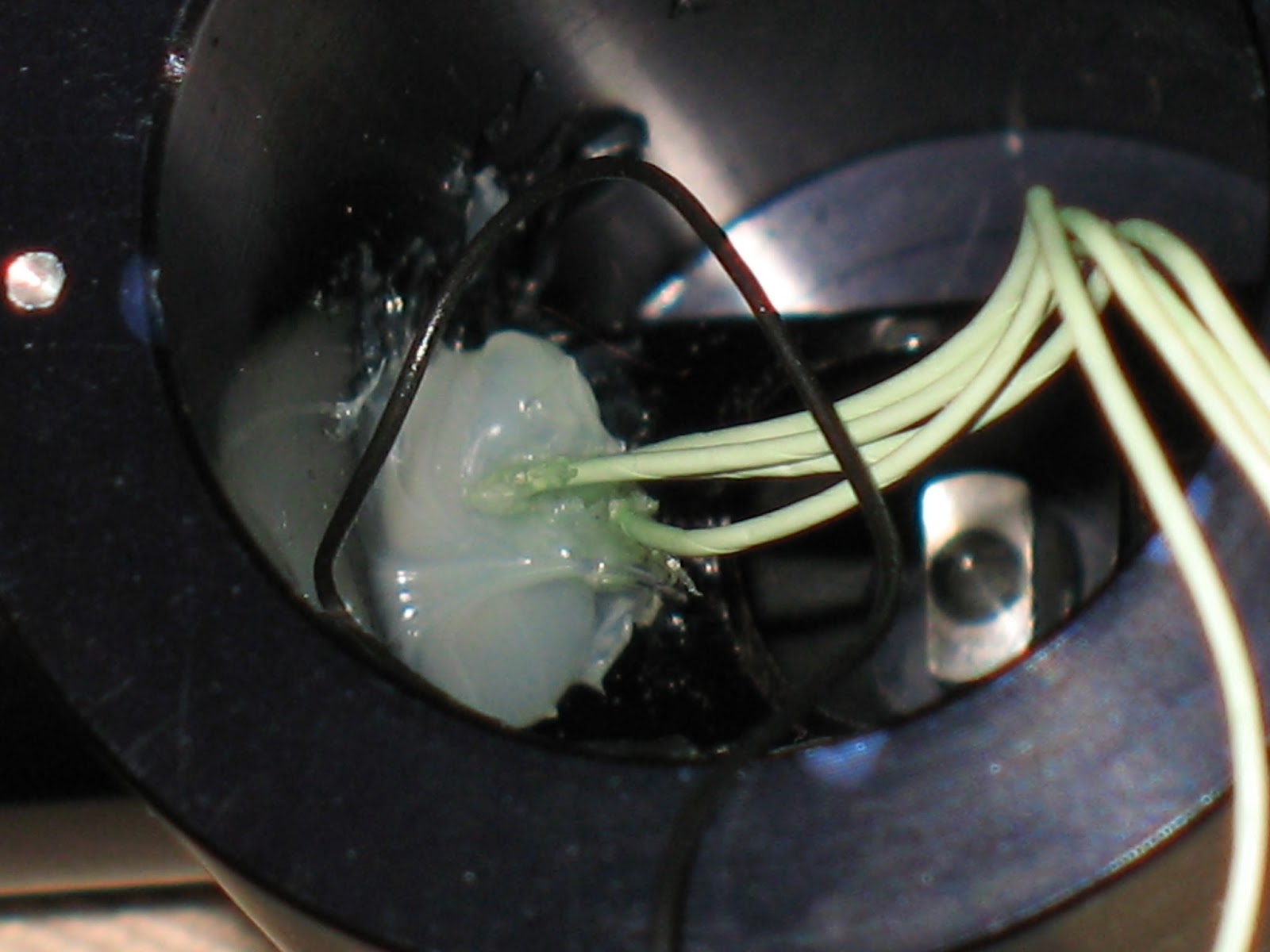
I opened the cables jackets to get the cables out. And since the Hovland uses to separate small cables for each contact I used the same configuration for rewiring the Aro. Except at the end, the last few cm that go to the arm plug, so not to get in the way of the freedom of the movemen. So the very end the double cables become single. Also the Aro original wiring does it to get thinner cables at the end . So nota interrupted chain in the original not an interrupted chain with the Hovland.

Why I decided to use the Hovland phono cable? This cable has a very fluid and expressive midrange and is unmechanical sounding the way the Aro is, but is well extended at the top and slightly shy at the bottom.

So how did it sounded?

From the start, and like the other cables tried befor it, its frequencies extremes are freerer then the original Aro internal wiring. Image is wider but not taller. It is more transparent then the Aro wiring not in the middle range but everyway else. Its anylitic capacity are spread all over the frequencies. in the Aro with the original wiring are concentrated in the medium high medium frequencies. The higher you go or the lower you go the less details you have, like you have a stepted down volume in the frequencies extremes. They are there but less present.
In the Hovland there is a very slight veil in comparison to the all siver cables, but is more fluid, not the same timbric distinction but close. Globally the Hovland really sound like a bridge between the Kondo, Ikeda, VDH and the Naim original wiring. The only very important to me thing it misses is that kind of special urgency in the attack of the notes the original naim cables has.

So what is my conclusion: don't spend a lot of time and money on rewiring the Aro. 
The only cable that I could prefer and only sometimes to the original one is the Hovland. But the Hovland is not in production any more, was expensive and you have to destroy it to use as internal tonearm wiring cable.

So at the end it seemed that I could not really find a better cable then the original one for the internal Aro wiring. 
I gave my very last try. I didn't want to, I was feeling in the position that I could forcast more or less the cables behaviour with the Aro. But one day I was too damn curious and I had to try. And then after all this rewiring, rewiring the Aro for me it takes about one hour, of course when everything around is ready for it.

The last cable is another Van den Hul. I had wired before the Aro with a VDH but was the single strand version, now I had the multi stranded version that looks like a thiker version of the Audio Note.

 I put a record on and...this is was really interesting.

I had the power and urgence of the Naim original cabling without the inconsistencies, (Aro owner they know what I am talking about. Sometimes is sound like a spell, magic, other times you don't understand what happened).
I had the beautiful timbres of the silver cables, but the sounds was more solid then the Ikeda, the Ikeda was more delicate, and expecially the silence between the notes is much improved iin comparison to all the other cables I have tried.
And best of all it is the most neutral of all. You don't hear it in every recording. It was very clear for me. For example when you have experienced all the internal wiring the Aro is very recognaizable when it has its original wiring, when it is cabled with the Ikeda or the Cardas or the VDH single stranded.

So this one is worthed and can be bought! But only for your spare Aro arm top since the Aro in its original version has something special that it is nice to go back to.
If you have an all Naim system then you shoudn't even try another wiring. The original one in an all Naim system is like a tailor made suit.
I said this is just if you have a spare arm top since: everytime you put the Aro with its original internal wiring on, you will loose some extension, some timbre purity, some other thing, but you inexplicably have also someway a deeper connection to the music! Music is less beautiful and complete in its single constituents but has more meaning. A Naim magic wonder!


lundi 14 décembre 2015

VDH The Silver MKIII


I think I am going to write about this first: Van den Hul the Silver MKIII.
So forget about what I have written in the first page.

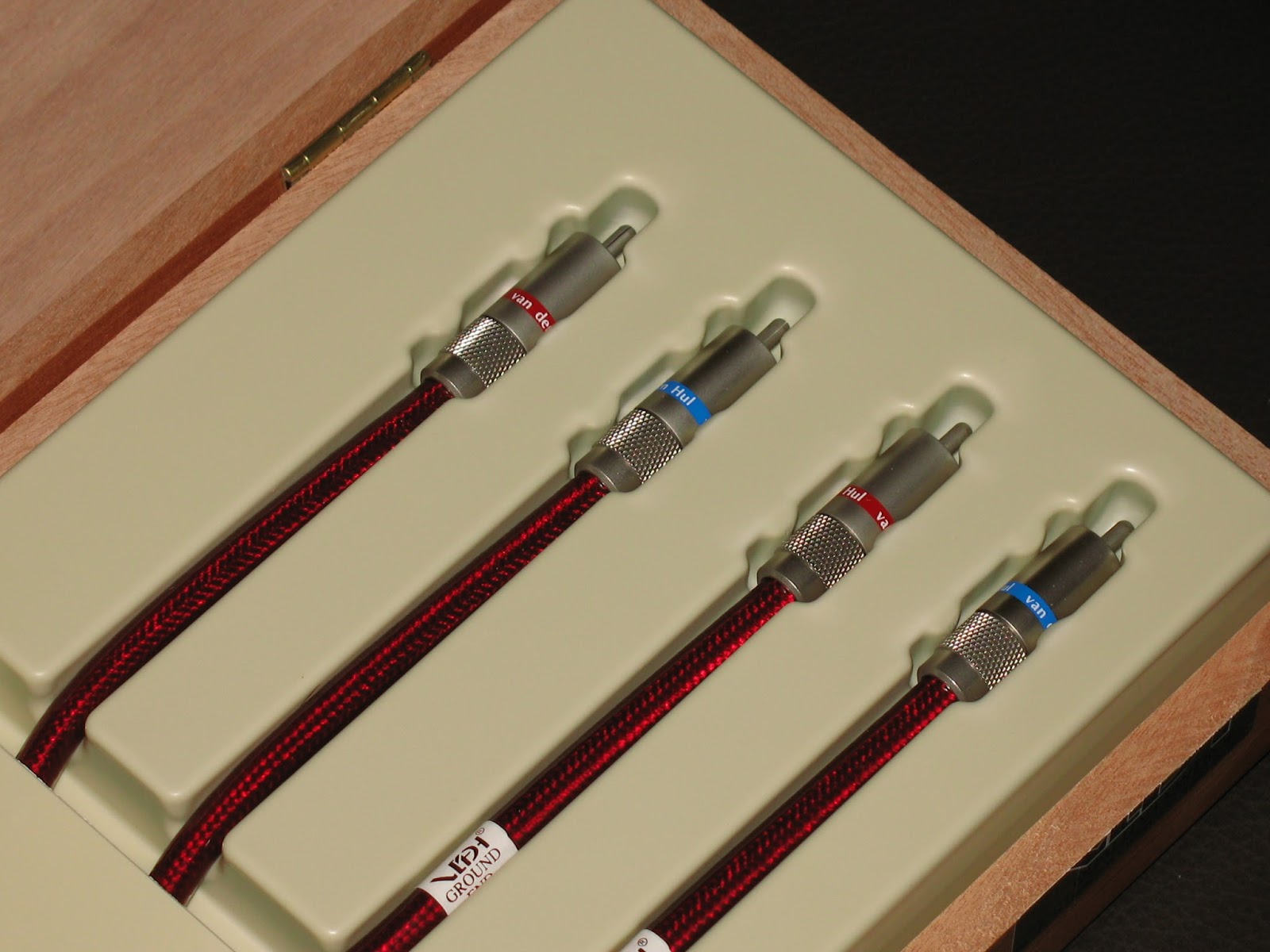
OK, this cable is very expensive. This is for sure. It comes in a nice wood box. But is it worthed its price? The answer is very simple and double: absolutely yes and absolutely not.
How can be this way? It is very easy.

Let's say you have a medium range hifi system with nice cable like for example the VDH The Integration. You change for the VDH the Silver and... you are not sure which is better. Yes the cheaper cables has some mutism on the higher frequency (not frequency wise but as far as timbric content) , or  part of the medium high frequency but it is very musical and spatially well organized. The space between instruments is dense in its silence and this is something I appreciate. The Silver silence and space between the instruments cannot be more different...  the notes decays are longer, the high and very high frequencies have a richness and density of tinbre that is extremely rare. This richness of timbre makes the cable going in the high frequencies without any trace of harshness. I say any trace. Of course if the other component connected are of the same level. So if it sound harsh it is not its fault for sure. It is a cable that is able of being of a gentle clearness and expecially of a enourmous dynamic capability.

Comparison with other top VDH: The Mountain shows a dynamic constipation and not the same timbric quality. The Cliff is dynamically similar but loses in the timbric department. The Integration has a kind of veil in the medium frequencies in comparison, and this is revelatory since the Integration in comparison to other cables reveals the same shortcomings and in the same frequency range. The First when it mates to perfection, since it can gives some strange results and hum in some combination: the timbre are on the same level and dynamically are very close. A little muted on the high frequency but it has its beauty.

It must be clear that these are foundings on an absolute personal scale. What does it means. For me it means that with a certain component, if correctly matched, you can reach an higher quality musical reproduction. So if a cable like the VDH Integration is used in a lesser system and with for example the Inspiration loudpeaker cable you would end up having a better result then if you use the better VDH Silver. For example the louspeaker VDH cable the Cloud works better with the Cliff interconnect then the Mountain, but with the more expensive Cumulus I guess, since I have never heard the combination,the Mountain could be a better match.

Comparing it to the Cardas Clear. The Clear has the same dynamically freedom if not a little more and it is dynamically more linear. It means that the different parts of the music maintain the same proportion even in the most complex passages. The VDH Silver in this aspect is not on the same level. When things get too complex the proportions and dimension of the instruments change slightly.

Timbrically the Cardas Clear is on very high level, but the VDH has something magic on its side  that the Cardas miss. For example the nylon strings on a guitar with the VDH are real nylon and you can ear the strings tension. In the Cardas you ear it is nylon, but with more help of your brain. It is like the Cardas make you see 80% of the nylon while the VDH makes you ear 90% of the nylon.
This happens also with other instruments. With the piano the note attack is slightly better with the Cardas but the decay and the piano encloser resonance is more evidend with the VDH.
So at the end between the two it is a question of taste. I would suggest that with small ensemble the VDH is better but with big mass is the Clear is better.

Do't expect to ear this from a very good medium range equipment. You need high end material. You would end up haveing a wrong experience and start saying stupidity like the Cardas is flat and soulless and  the VDH strange on the mid bass or something like that.

Two special things of the greatest interest at least for me:  this cable  shows the slightest changes in the set up. This allowed me to set up a cartridge in much less time I am used to need. This cable shows all the coloration of other cables when compared with. This could be incredible. One cable we always liked after hearing the Silver sounds grossly coloured! It is like listening to Pavarotti. Try if you have never heard him singing and try even if you don't like the kind and compare the same aria with another tenor. His singing shows what the other one is missing: if he is too forced when goes up in the highest notes, or not too clear in diction, or not so agile, or if there is a kind of veil in his voice or that he doesn't have  the same natural flow.

This cable needs a certain time of burn in. I would say at least about 40 hours to loose some mechanical feeling.
After that for me it is a winner. This cable is a masterwork.
One of the most neutral cable around with one of the best timbric reproduction too.

I have bought the pair.
I would like to buy another pair but...it is so expensive... if Mr VDH will ever read this maybe could sell me one at factory price...